 Khaled Koubaa

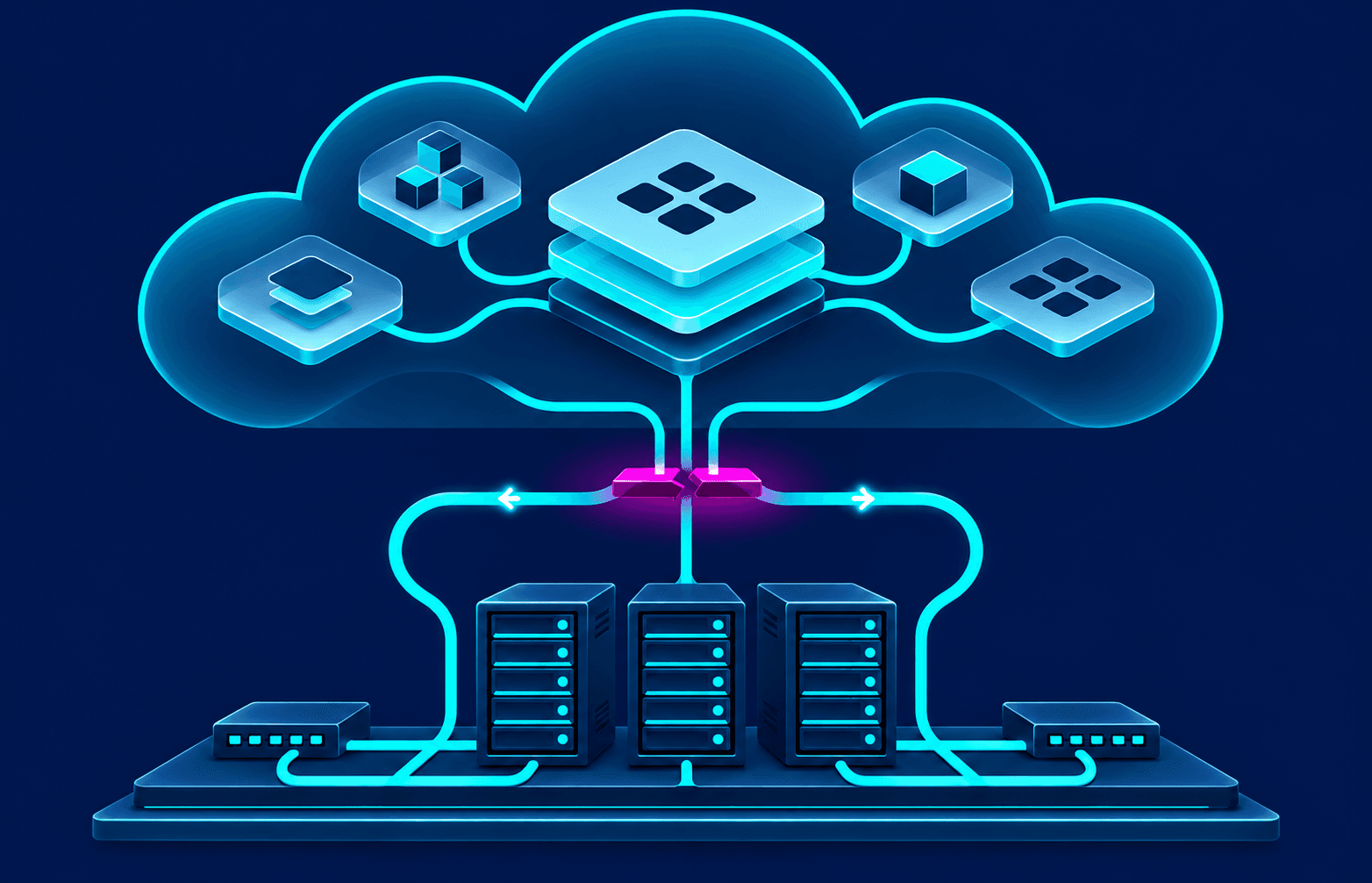
Recent outages expose a procurement problem: advanced digital services can depend on infrastructure, interfaces, and recovery arrangements that buyers have not adequately examined. The priority is to establish whether an entire business service can withstand change and failure.
The strongest lesson from recent technology outages is that organizations need to assess the resilience of the complete service they are buying. Hardware age matters, but failures can also emerge when software changes, network configurations, shared dependencies, and recovery procedures interact. A sophisticated application cannot compensate for every weakness beneath it.
For chief information officers, enterprise procurement leaders, and operational risk teams, this changes the investment question. Before approving another platform or AI integration, they should establish whether it introduces dependencies that could interrupt essential work—and whether the organization can continue operating when those dependencies fail.
AT Worthy’s assessment of the available evidence is that a gap can emerge between the pace of digital expansion and the ability to validate, operate, and recover the systems supporting it. The recent incidents illustrate several mechanisms through which this happens. They do not establish that hardware is universally falling behind software, that outages are increasing across the economy, or that one technical cause connects the failures.
What the recent incidents actually establish
Three November incidents show why a single explanation is insufficient.
On November 13, the Federal Aviation Administration experienced network instability that prompted a nationwide ground stop. In its November 15 account, the FAA said excessive connection attempts destabilized legacy equipment. Its initial investigation identified two possible originating locations; work at one included deployment of a new router. Isolating the locations stabilized the network. The FAA said the root cause remained under investigation and distinguished the routine equipment work from its broader modernization program. This is preliminary evidence of a problem at the interface between equipment, network behavior, and an existing operating environment—not a completed diagnosis of a defective router or inadequate hardware capacity. FAA incident account.
Microsoft’s November 12–13 Exchange Online disruption presents a different mechanism. In a preliminary Microsoft service notice reproduced by the University of Pennsylvania, the company described traffic shifts during maintenance and upgrades exposing a latent software bug. Requests accumulated until affected servers exhausted available processing capacity and stopped accepting new connections. That account connects a software defect, network change, and capacity exhaustion. It does not establish that the servers were obsolete or that purchasing faster hardware would have prevented the incident. Microsoft service notices reproduced by Penn.
Apple attributed its November 17 disruption to an internal update, according to its statement reported by the Associated Press. Affected services included the App Store, Apple Music, and iCloud sign-in. That explanation identifies a trigger, but does not disclose enough engineering detail to establish why the update caused widespread interruption. AP report.
These accounts support investigation of change management and system interactions. They do not justify treating every outage as evidence of aging infrastructure. A trigger is the event preceding failure; a root-cause investigation must explain why safeguards failed to contain it.
Infrastructure age is a real exposure—with an important qualification
Evidence of aging-system risk exists independently of this month’s outages.
In December 2024, the U.S. Government Accountability Office reported that an FAA assessment had classified 51 of 138 air traffic control systems as unsustainable and another 54 as potentially unsustainable. These were historical assessment categories, not a November 2026 inventory. They nevertheless documented a substantial maintenance and modernization challenge before the latest disruption. GAO’s 2024 testimony.
Evidence figure
105 of 138 FAA systems faced sustainability concerns
U.S. air traffic control systems · FAA 2023 assessment, reported by GAO in December 2024 · number of systems
Modernization exposure was documented before the latest incident.
Selected: Unsustainable · 51
Source: GAO-25-107917
Historical inventory, not a November 2026 assessment. Remaining systems = 138 − 51 − 54; no additional category name is inferred. Counts do not establish the cause of the November outage.
View equivalent data table
| Classification | Systems |
|---|---|
| Unsustainable | 51 |
| Potentially unsustainable | 54 |
| Remaining systems (derived) | 33 |
More recently, GAO’s September 2026 review of the FAA’s accelerated modernization effort identified missing planning foundations: a reliable lifecycle cost estimate and an integrated master schedule. GAO warned that these gaps increased the risks of further delays, cost overruns, and continued reliance on outdated systems. GAO’s September 2026 review.
The lesson for enterprise buyers is broader than replacing old equipment. A modernization plan must account for the period when old and new components coexist. That transition introduces compatibility questions, temporary dependencies, staff training needs, and rollback decisions. Funding the destination without funding the transition can leave an organization exposed during implementation.
Age should therefore prompt questions about supportability, spare parts, documentation, skills, and compatibility. It should not substitute for evidence about actual operating condition. An older, supported system with well-tested boundaries may be more dependable for a particular task than a newer platform whose failure behavior is poorly understood.
New infrastructure can fail through new software
The July 19, 2024 CrowdStrike incident provides a useful counterexample to the argument that obsolete hardware explains major disruption. CrowdStrike’s root-cause summary described a content configuration update that caused affected Windows systems to crash. Its account identified a mismatch between expected and supplied input fields that led to an invalid memory read. The published mechanism was a software failure, rather than a diagnosis of aging equipment. CrowdStrike root-cause summary.
The procurement implication is that buyers must consider how a supplier distributes changes, including changes outside a conventional application upgrade. A service can change through configuration, security content, routing rules, or an upstream dependency. Approval controls over the application alone may leave other consequential changes outside the buyer’s view.
This does not mean that frequent updates are inherently unsafe. Google’s Site Reliability Engineering guidance explains how small, automated releases and limited initial deployments can help reconcile delivery speed with reliability. A “canary” deployment exposes a small part of production to a change before expanding it. The guidance also recognizes that testing cannot reproduce every production condition. Google SRE guidance.
The relevant distinction is between speed supported by effective controls and speed that exceeds those controls. Slowing every release can delay security fixes and accumulate larger changes. Buyers should examine deployment safeguards and demonstrated recovery, rather than treating release frequency as a verdict.
Shared dependencies determine how far a failure travels
An application can run on modern hardware and still depend on a fragile shared service.
Cloudflare’s June 12, 2025 incident illustrates this mechanism. The company reported that a failure in storage infrastructure supporting Workers KV, partly backed by a third-party cloud provider, disrupted multiple products. Affected services included authentication-related capabilities and Workers AI. Other core services were not directly affected. The dependency structure explains why the impact crossed product boundaries without making the entire platform unavailable. Cloudflare incident report.
Evidence figure
Shared storage connected distinct service failures
Cloudflare · June 12, 2025 · selected documented dependencies; qualitative map
Separate products can share a failure path.
Selected: Access · Workers KV · Policy and identity storage
Source: Cloudflare incident report
Selected direct dependencies reported by the provider; not the complete architecture. Arrows point from dependent to dependency. Node positions and sizes carry no numerical meaning.
View equivalent data table
| Dependent service | Depends on | Role |
|---|---|---|
| Access | Workers KV | Policy and identity storage |
| Workers AI | Workers KV | Request configuration and routing |
| WARP | Workers KV | Registration and authentication |
| WARP | Access | Authentication dependency |
In an August follow-up, Cloudflare described a redesigned storage architecture and reported improvements during rollout. That disclosure is evidence of engineering work and the company’s reported results; it is not independent proof of future outage immunity. Cloudflare architecture follow-up.
For buyers, the practical question is whether apparently separate services share the same failure path. Two applications may depend on one identity provider. Two hosting regions may share a configuration system. A backup environment may require the same administrative credentials as production.
These are scenarios to investigate, not findings about every cloud architecture. Their significance is that redundancy must be evaluated against a specified failure. A second server can address a server failure while offering little protection against a faulty configuration distributed to both servers.
Purchasing from two suppliers can likewise reduce one exposure while preserving another if both rely on the same upstream provider. Supplier diversity and operational independence are related, but they are not interchangeable.
Where hardware and physical infrastructure genuinely constrain AI
There is a separate, well-supported case that physical infrastructure can limit digital expansion.
The International Energy Agency’s Electricity 2026 report describes a mismatch in construction timelines: planning, permitting, and completing new grid infrastructure can take five to fifteen years, compared with one to three years for data centres. These are broad ranges, not delivery schedules for individual projects. They show why buying compute equipment does not automatically secure the electricity infrastructure needed to operate it. IEA, Electricity 2026.
Evidence figure
Grid delivery can outlast data-centre construction
Global planning context · IEA Electricity 2026 · reported completion ranges, years
Verify power readiness separately from the delivery of a building or compute equipment.
Selected: New grid infrastructure · 5 · 15
Source: IEA, Electricity 2026 — Grids
Broad ranges, not project forecasts or confidence intervals. Grid scope includes planning and permitting. Data-centre construction does not establish power availability. No midpoint or average is calculated.
View equivalent data table
| Infrastructure | Lower bound (years) | Upper bound (years) |
|---|---|---|
| New grid infrastructure | 5 | 15 |
| Data centres | 1 | 3 |
For an enterprise committing to AI capacity, this creates questions about when capacity will actually be available, where workloads can run, and whether a supplier’s expansion depends on unfinished infrastructure. Announced facilities, installed equipment, connected power, and production-ready services are different milestones.
This is a capacity-delivery exposure. It should be distinguished from an operational outage caused by a software defect. Both matter, but they require different evidence and responses.
AI can also increase operational exposure without exhausting hardware. Consider a proposed agent that checks inventory, requests approval, and creates a purchase order across several enterprise systems. This hypothetical workflow inherits the availability and permission requirements of each system. If an interrupted transaction is retried, the design must prevent duplicate orders and distinguish completed actions from pending ones.
The decision is therefore not simply whether the AI model is capable. It is whether the complete workflow remains correct, recoverable, and governable under partial failure. Nothing in the incidents examined here establishes that AI caused them.
Procurement should follow the business service
Traditional product comparisons can obscure this exposure when they emphasize features, price, and headline availability. Buyers need an additional view organized around the work that must continue.
For a payroll service, the outcome is employees receiving accurate payments on time. For a public benefits portal, it is an eligible person completing an application. For an AI-assisted procurement workflow, it may be an authorized order recorded once, with an auditable approval trail.
Start by identifying a small number of critical outcomes. Then trace the systems, external services, and human interventions required to deliver each one. The resulting investigation should distinguish four questions:
| Exposure | What procurement should establish | Evidence to request |
|---|---|---|
| Capacity and supportability | Can the service meet expected demand, and remain maintainable? | Relevant load-test results, support commitments, capacity assumptions, and lifecycle plans |
| Change and compatibility | Can updates be introduced without unacceptable disruption? | Staged deployment arrangements, compatibility testing, rollback conditions, and change-related incident history |
| Shared dependencies | Can one failure disable the primary service and its alternative? | Dependency diagrams, failure-isolation explanations, and tests of independence |
| Recovery and continuity | Can essential work resume within the organization’s tolerance? | Exercise results, actual restoration experience, data reconciliation procedures, and usable fallback arrangements |
These are suggested due-diligence questions, not a formal AT Worthy scoring system. Evidence should be proportionate to the importance of the service and the buyer’s ability to influence the supplier.
A smaller organization may not obtain a detailed infrastructure diagram from a major platform. It can still establish available export mechanisms, emergency contact arrangements, alternative communication channels, and which internal processes must pause when the platform is unavailable.
Measure usable recovery, not only technical restoration
A supplier declaring a service restored does not necessarily mean the customer’s operation has recovered.
Evidence figure
Cloudflare identified a shared cause 14 minutes after onset
June 12, 2025 · UTC · selected milestones; elapsed minutes from 17:52
Recognizing a common dependency preceded restoration by more than two hours.
Selected: 17:52 · 0 · Incident starts
Source: Cloudflare incident timeline
Elapsed minutes are calculated from the published UTC timestamps. Selected events only; the 156-minute span is not a measurement of customer operational recovery. SLO means service-level objective.
View equivalent data table
| Time (UTC) | Elapsed minutes | Milestone |
|---|---|---|
| 17:52 | 0 | Incident starts |
| 18:06 | 14 | Shared KV cause identified |
| 18:21 | 29 | Priority raised to P0 |
| 20:23 | 151 | Recovery begins |
| 20:28 | 156 | Impact ends; SLOs restored |
Consider a hypothetical payment interruption. Network access returns, but the organization must still determine which transactions completed, reconcile pending instructions, and prevent duplicate submissions. A recovery measurement that stops when the application responds misses this remaining work.
Procurement and risk teams should distinguish the supplier’s restoration target, its performance in actual incidents, and the customer’s time to resume dependable operations. A recovery target is a planning commitment. An exercise provides evidence under specified conditions. An incident shows performance under one real set of circumstances. None alone establishes performance in every future failure.
Commercial terms should reflect that distinction. An availability commitment may address a narrowly defined component while the buyer depends on a longer workflow. A financial credit does not complete interrupted work. Buyers should examine measurement scope, exclusions, notification provisions, and the operational assistance available during recovery.
Fallback arrangements also deserve realistic testing. A manual process may serve a handful of transactions but fail at peak demand. An alternative channel may be inaccessible to some users. A system that preserves safety by stopping an operation should be assessed differently from one that continues operating with uncertain results.
What public evidence can—and cannot—tell a buyer
Public incident reports can reveal affected services, acknowledged dependencies, recovery sequences, and proposed corrective actions. Repeated disclosures can help identify questions for renewal negotiations or deeper technical review.
Their limitations are equally consequential. Providers differ in what they publish, how they define incidents, and how long they retain records. A vendor with detailed disclosures may appear worse than a less transparent competitor. Counting public outages without accounting for those differences can reward opacity.
AT Worthy’s Data-to-Rating methodology provides a relevant discipline: keep observations separate from evaluative judgments, preserve evidence lineage, and make uncertainty explicit. This article does not apply a formal D2R assessment, assign ratings, or establish comparative vendor performance.
The distinction matters commercially. A documented dependency is an observable fact. A conclusion that it creates unacceptable exposure requires information about architecture, safeguards, workload, and the buyer’s tolerance. Where public evidence ends, the next step may be a targeted supplier question or commissioned technical investigation.
The closest assessment area is AI and Digital Worthiness, which assesses whether an entity provides a user experience worthy of trust, confidence, and praise through the effective use of digital and AI capabilities. Continuity, accessible alternatives, and accurate recovery communications are relevant to that experience. They do not, by themselves, establish an overall worthiness verdict.
What leaders should monitor next
For critical suppliers, monitoring should follow unresolved questions rather than simply collect outage headlines.
Track whether preliminary explanations become final technical reports; whether promised safeguards are implemented; whether similar failure mechanisms recur; and whether recovery tests include shared dependencies. For planned AI capacity, distinguish expansion announcements from operational readiness.
Internally, review whether the number of automated workflows is growing faster than the organization’s ability to identify their dependencies and recover interrupted transactions. Watch for emergency changes, repeated rollback difficulties, unsupported components, and continuity plans that have not been exercised at realistic volume.
A useful next step is to select one essential workflow before the next procurement approval or renewal. Identify what stops it, what remains available, who can authorize an alternative, and what evidence shows that the alternative works.
The investment priority should follow the weakness that this investigation finds. Some organizations will need replacement hardware. Others will need better isolation, deployment controls, capacity management, or recovery procedures. The defensible objective is to ensure that digital capability expands alongside the ability to sustain the outcomes users depend on.
Sources
- FAA: Nationwide Ground Stop—Questions and Answers, November 15, 2026.
- University of Pennsylvania: reproduced Microsoft service incident notices.
- Associated Press: Apple and Marriott outages, November 17, 2026.
- GAO: Aging air traffic control systems, December 2024, and modernization planning, September 2026.
- CrowdStrike: Channel File 291 root-cause executive summary, August 6, 2024.
- Cloudflare: June 2025 incident report and August 2025 architecture follow-up.
- Google: Site Reliability Engineering—Canarying Releases.
- IEA: Electricity 2026—Grids.
- Khaled Koubaa, Data-to-Rating (D2R), version 9, supplied project reference.